

Why 80% of Your Conversations Are Failing (And How to Fix Them)

Have you ever walked away from a conversation feeling like something went wrong, but you couldn't quite put your finger on what it was? Maybe you felt misunderstood, or perhaps you sensed the other person wasn't really hearing you. You're not imagining things – and you're definitely not alone.
After years of studying human behavior and observing countless interactions, I've discovered something fascinating: most of us think we're decent communicators, but we're actually missing about 80% of what's really happening in our conversations. This isn't meant to discourage you – it's actually incredibly hopeful news. Once you understand what you've been missing, everything can change.
Your relationships can become deeper and more meaningful. Your professional interactions can become more effective and rewarding. Most importantly, you'll finally feel truly heard by others, and you'll develop the ability to really hear them in return.
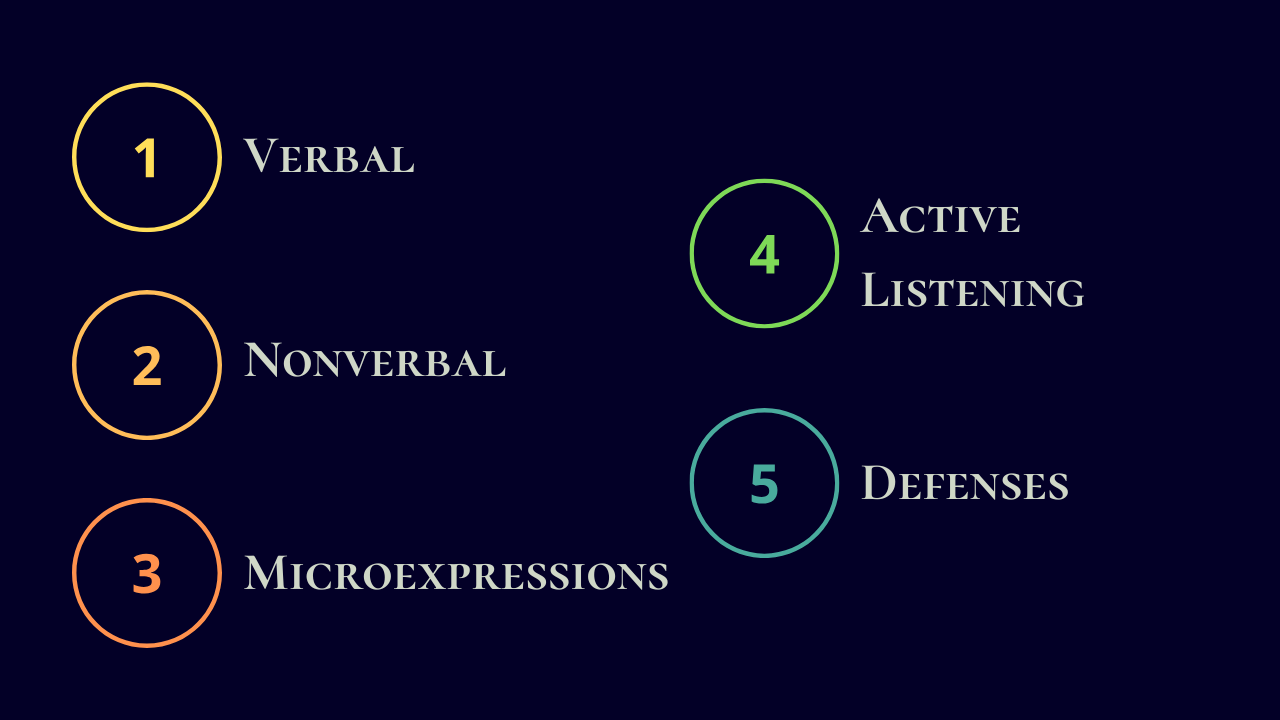
The secret lies in understanding that communication isn't just about talking. It's a sophisticated process involving five essential elements that most people never learn to use effectively. When you master these components, it's like suddenly being able to see the full spectrum of human interaction instead of just a narrow slice.
Understanding Verbal Communication
Let's start with what seems like the most obvious part – the words we speak. But here's where many people get it wrong: they assume verbal communication is only about the words themselves. In reality, it's much more about how you deliver those words.
Consider this simple phrase: "That's interesting." Depending on your tone, pace, and emphasis, those two words could sound encouraging, sarcastic, dismissive, or genuinely curious. The same words can build someone up or tear them down, all based on your delivery.
Steve Jobs was a master of this principle. When he introduced the iPhone in 2007, he wasn't simply reading technical specifications. He carefully controlled his vocal delivery to build anticipation and create excitement. His words mattered, but how he said them transformed a product announcement into a cultural moment.
Your facial expressions and gestures aren't separate from your words – they're part of the complete verbal package. When all these elements align, psychologists call it "congruent communication." When they don't match, people instinctively sense something is off, even if they can't identify exactly what feels wrong.
The key to improving your verbal communication is developing awareness of your complete presentation. Try recording yourself during a casual conversation sometime (with permission, of course). You might be surprised by what you discover about your own communication patterns and habits.
The Silent Conversation: Non-Verbal Communication
Here's something that might surprise you: according to researcher Albert Mehrabian, 55% of communication happens without words. This means that more than half of every conversation you have is taking place in complete silence, through body language alone.
Your posture, gestures, and facial expressions constantly broadcast information about your confidence level, emotional state, and genuine feelings. The remarkable thing is that this happens whether you're consciously aware of it or not – your body is always communicating.
Chris Voss, a former FBI hostage negotiator, built his career on understanding this principle. During high-stakes negotiations with dangerous individuals, he couldn't rely solely on words. He had to read every subtle movement, every shift in posture, every change in breathing pattern. In his world, these skills literally meant the difference between life and death.
In his book "Never Split the Difference," Voss describes watching for inconsistencies between what suspects said and what their bodies revealed. A person might claim to be calm and cooperative, but their clenched fists and rigid posture would tell an entirely different story.
While you probably won't find yourself negotiating with criminals, these same principles apply to everyday interactions. When you learn to align your body language with your intentions, people begin trusting you more quickly. When you can read others' non-verbal cues accurately, you gain valuable insights that can help you navigate both personal and professional relationships more effectively.
Reading Microexpressions: The Subtle Signals
Now we're entering more advanced territory. Microexpressions are brief, involuntary facial expressions that reveal true emotions people are trying to hide. They last less than half a second, but they provide incredibly valuable information about what someone is really thinking or feeling.
Paul Ekman, the psychologist who pioneered microexpression research, discovered that these expressions are universal across all cultures. A flash of contempt looks identical whether you're in New York or Nepal. A brief expression of fear appears the same in Tokyo or anywhere else in the world.
Chris Voss used microexpression reading extensively during his FBI career. He learned to spot the tiny facial expressions that revealed when someone was lying, frightened, or planning something dangerous. The same skills that helped him save lives can help you navigate everyday situations with greater awareness and effectiveness.
When someone tells you they're "totally fine" with your decision but flashes a microexpression of anger, you're receiving important information. When a colleague claims to support your proposal but shows brief contempt, you know there's more to explore. When a friend insists they're okay but displays micro-sadness, you understand there's likely more to the story.
Learning to notice these expressions isn't about becoming manipulative or intrusive. It's about developing the sensitivity to address real concerns before they grow into bigger problems. It's about caring enough to notice when someone's words don't quite match their feelings, giving you the opportunity to create deeper understanding.
The Art of Active Listening
If I had to choose one skill that would most dramatically improve your relationships, this would be it. True active listening is surprisingly rare in our fast-paced world, and when people experience it, they remember the encounter.
Most of us aren't genuinely listening during conversations. Instead, we're waiting for our turn to speak while mentally preparing our response. We're thinking about what we want to say next rather than truly absorbing what the other person is sharing with us.
Active listening is fundamentally different. It involves being completely present and engaged in the moment. It means reflecting back what you've heard to ensure accurate understanding. It includes asking thoughtful questions that demonstrate you're genuinely trying to grasp their perspective.
Chris Voss perfected this skill during hostage negotiations, where misunderstanding could have fatal consequences. He developed techniques like "tactical empathy" – the ability to understand and acknowledge someone's perspective without necessarily agreeing with their position. He might say something like "It sounds like you feel you've been treated unfairly" or "It seems like this situation has been really frustrating for you."
This approach works because it makes people feel genuinely heard and understood. When someone feels truly listened to, they're much more likely to open up, share important information, and work collaboratively toward solutions. In Voss's world, this meant convincing hostage-takers to release their captives. In your world, it might mean resolving conflicts with your spouse, understanding your teenager's struggles, or building stronger professional relationships.
The technique itself is simple to understand but challenging to master. It requires temporarily setting aside your own agenda and focusing completely on understanding the other person's experience. When you develop this skill, people will begin seeking you out for advice, trusting you with sensitive information, and viewing you as someone who truly "gets it."
Overcoming Defensive Responses
This is often where good communication breaks down completely. Defensive behaviors might protect your ego in the short term, but they damage trust and connection over time, sometimes irreparably.
We all have defensive patterns that emerge when we feel criticized or threatened. Some people deny outright ("I never said that"), others deflect responsibility ("Well, what about when you did the same thing?"), blame-shift ("That's not my fault"), or rationalize their actions ("I had good reasons for doing that"). These responses are natural and understandable, but they create emotional distance instead of fostering understanding.
Chris Voss learned early in his negotiation career that defensiveness was the enemy of progress. When someone criticized the FBI's approach or questioned his methods, responding defensively would shut down communication entirely. Instead, he learned to acknowledge concerns openly and explore them further, which kept conversations productive.
The most effective communicators have developed the ability to catch their defensive impulses before they sabotage important conversations. When someone brings up a concern or offers criticism, instead of immediately protecting themselves, they pause and genuinely consider whether there might be truth in what's being said.
This doesn't mean becoming passive or accepting unfair treatment. It means having the confidence to examine feedback without immediately rejecting it. Sometimes the criticism contains valid and helpful insights. Sometimes it reveals important information about the other person's perspective or emotional state. Either way, staying non-defensive keeps the conversation moving in a constructive direction.
Integrating All Five Components
The real transformation happens when you begin integrating all five components together. Communication stops being merely about transmitting information and becomes about creating genuine connection and mutual understanding.
Think about the people in your life who you consider exceptional communicators. They probably excel in most or all of these areas. They speak with clear intention, project appropriate non-verbal signals, notice subtle emotional cues, listen with genuine interest, and respond without becoming defensive.
This isn't about achieving perfection or learning to manipulate others. It's about becoming more conscious and intentional in how you connect with people. It's about caring enough to develop skills that help you understand others more deeply while expressing yourself more effectively.
The beautiful aspect of developing these skills is that they benefit everyone involved in the interaction. When you become a more skilled communicator, the people around you feel more heard, understood, and valued. Your relationships naturally become deeper and more satisfying. Your professional life often improves significantly because people learn to trust and respect you more.
The best approach is to start with one component and practice it until it becomes natural and automatic. Then gradually add another element to your communication toolkit. Before long, you'll discover that your conversations have more depth, your relationships are stronger, and your ability to create positive outcomes has improved dramatically.
Remember, communication isn't just about getting your point across effectively. At its heart, it's about creating moments of genuine human connection in a world that desperately needs more authentic understanding between people.
References
Ekman, P. (2003). Emotions revealed: Recognizing faces and feelings to improve communication and emotional life. Times Books.
Mehrabian, A. (1971). Silent messages: Implicit communication of emotions and attitudes. Wadsworth.
Voss, C., & Raz, T. (2016). Never split the difference: Negotiating as if your life depended on it. Harper Business.
Ekman, P., & Friesen, W. V. (1969). The repertoire of nonverbal behavior: Categories, origins, usage, and coding. Semiotica, 1(1), 49-98.
Mehrabian, A., & Wiener, M. (1967). Decoding of inconsistent communications. Journal of Personality and Social Psychology, 6(1), 109-114.